Tuesday, July 17, 2007

Banjos


Not too long ago we got Paul Brown (whom many of you have heard reading the news on NPR) to come out and put some clawhammer banjo on the recording project. He did a great job and said that learning and playing on the Nepali song was surprisingly like Appalachian Old-Time. He said the music on the project was not only fascinating, but sounded really great too.


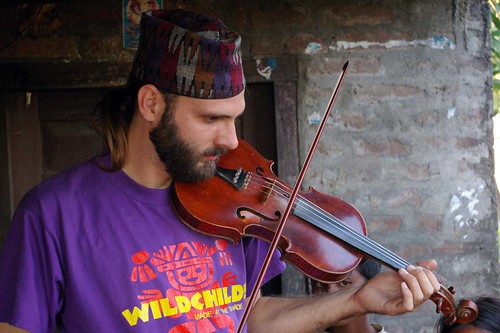
Then just this last week while Danny and I were teaching bluegrass music at McDaniel College’s “Common Ground” program, we had a chance to work and perform with Tony Trischka. In case there is anyone out there who might not know, he is a phenomenal player as well as a really nice guy. We told him about Gandharbas and the Mountain Music Project, and he was really interested in the music. We played him some of the project so far and he volunteered to put a finger-style banjo track on the project. He is such a master of his instrument and such a respected musician, we are really happy to have him on board. This CD is going to be a landmark album introducing the music of the Gandharbas to the world of traditional style music in the United States.

Thursday, May 03, 2007

Abigail Washburn! Aaron & Matthew Olwell!


Well, here is yet another exciting post from Tara and Danny on the CD recording project. We have recorded Aaron Olwell on the wooden flute and his brother Matthew Olwell on Appalachian style foot percussion in Charlottesville, VA.


From there we recorded Abigail Washburn’s vocals in Wilkesboro, North Carolina. She did an amazing job of lead and harmony singing in that cutting-edge old-time style of hers. This is going to be one hot CD when it comes out. A must-have for every household!


Sunday, March 04, 2007

Curtis Burch and Tim O'Brien!

This is an update from Tara and Danny. We just got back to Virginia from a fun-filled week of recording bluegrass musicians for the MMP’s CD project. (Since we are multi-tracking the recording, we are able to add people here for the US side of the fusion project.)


First we went to Bowling Green, Kentucky, to the home of Curtis Burch. For those of you who may not know the world of bluegrass music, Curtis is a Grammy award winning musician and a really fun guy. He used to be in The New Grass Revival and is known far and wide as Dr. Dobro. He recorded some great dobro tracks and did a great job of blending with the Nepali musicians recorded back in Kathmandu.


Then we headed down to “Music City USA” (Nashville, Tennessee), where we went to Tim O’Brien’s house. Tim is another Grammy award winning musician and a great bluegrass and old-time picker and singer. He added a lead vocal on one song, harmony vocal on another, a mandola part, and a great fiddle and vocal combination to parallel the sarangi and vocal number that Buddhiman recorded in Nepal. He was a delight to work with and has a real gift at finding just the right thing to add to bring out the best in the music.

Thursday, February 01, 2007

Danny's CD Release Party and MMP Fundraiser


Hey folks, Danny's celebrating the release of his new CD, "Roots and Branches" with a concert at The Old Stone School in Hillsboro, VA on February 10th.

If you're in the area, come on down and check out the rockin' lineup of phenomenal musicians. Zan McLeod (guitar and bouzouki), Ralph Gordon (bass), Nate Leath and Dave VanDeventer (fiddle), Rex McGee (banjo), and Matthew Olwell (percussion and percussive dance) will be joining Danny for some bluegrass, Irish, jazz and old-time.


There will be artwork on display by Melissa Foster who did the cover art for Roots and Branches. And of course we'll also have some Mountain Music Project t-shirts and an information booth with some photos and video from our expedition.

The Old Stone School is located at 37098 Charlestown Pike in Hillsboro, VA. Doors open at 7 PM. Showtime at 8 PM.

In other Mountain Music Project news, bassist Mark Schatz added some tracks to the fusion CD we started in Nepal. If you haven't heard of Mark, he's twice been named the International Bluegrass Music Association's bass player of the year. We'll keep you posted as more musicians join in the fun.

Sunday, December 03, 2006

Plane Tickets, Tikkas, and T-Shirts


We're about finished with this musical ramble here in Nepal. We say our goodbyes, with lots of red tikka powder on our foreheads, kattak scarves and marigold leis presented at wellwishing ceremonies. The Gandharba Culture and Arts Organization just gave a press conference demanding better representation for Dalit (untouchable) castes in Nepali parliament. We hope they get it.

Tara and Danny are here for a few more days, maybe we can get them to write another post before they come back across the pond. They were just interviewed by our radio friends at Green Productions. Dan's on a bus to India to meet up with Monga. I'm gone tomorrow; back to the states for a few weeks to catch up on some sleep and do a little fundraising before the next adventure begins.

The studio recordings will have some tracks added back in the states by some bluegrass musicians who couldn't make the trip. The film awaits translations, a lot of cash, and a month in Monga's editing studio in Dehli. We're hoping to have the film and CD finished in about six months, but for now we're too broke to make any promises (guerilla ethnomusicological expeditions ain't cheap). We'll let you know right here when the goods are ready, or you can email us and ask to be put on the mailing list. No spam I promise.

Meanwhile we've got some handsome T-shirts embroidered with the Mountain Music Project logo on the front and a sarangi and mandolin on the back. If you donate $50 or more to our tax-deductibly non-profit sponsor, we'll be glad to send you one.


Please make your checks out to: Tundra Club

...and mail them to:
Mountain Music Project
c/o Tundra Club
686 Canyon View Road
Bozeman, MT 59715
USA

Email: mountainmusicproject@gmail.com to let us know your size.

As we watch the Gandharbas selling their sarangis to the tourists in Kathmandu, we noticed that they could use a little marketing. We made em some shirts as well, hopefully these shirts will let the turistas know a little more about this unique and infectious music.

I'd like to take a moment to thank some folks back who've made our work to date possible. Without the selfless efforts of Charity Smith, Barrett Golding, Joanne Lee, Shannon Kelley, and Gregg Orr, we'd have had a rough go on this trip. For our donors, who I'll keep anonymous for the time being, we'd hug you if you were here. Y'all helped send several poor kids to school, and helped us to work with some amazing musicians, hopefully not for the last time.


And I'd personally like to thank Monga and Praveen for rocking so hard behind the cameras and for giving so much of their time and talents.

I'll keep this blog updated as things develop and I'm putting up more mp3's on the old posts, but for now, it's on to the Himalayan task of fundraising. As for that next adventure? We'll let you know real soon. Those Tibetan banjos sound kind of bluesy...

Thursday, November 30, 2006

Old Songs in Changing Times


In the Kathmandu valley, there are 800 year old religious shrines next to internet cafes. Barefoot sadhus walking side by side with modern businessmen. Loudspeakers on the sidewalk play Nepali Hip Hop as well as the old sarangi tunes. During our two months here in Nepal, we've worked to document the endangered songs of the villagers and have listened for the links to our own rural culture. But just as plenty of Americans don't listen to Bluegrass or Old-Time Appalachian tunes regularly, many young Nepalis find their way to the city where pop music is the soundtrack of life.

Younger Gandharbas are unlikely to be wandering minstrels like their parents. Some become studio musicians or find regular gigs at local restaurants. But most work the streets of Thamel, noodling on miniature sarangis for disinterested tourists, in hopes of selling one (and sending the money back to their village). Other Nepalis seem uninterested as well. The Gandharbas still bear the prejudice of the racial slur Gaine, which means "to hassle." They are stereotyped as demanding and dishonest, and the "untouchable-ness" still lingers in the minds of some Nepali castes.

When Nepal was first united, the king sent Gandharbas out to deliver the news to the remote Himalayan villages. But as more villages get electricity, televisions, and internet access, the Gandharbas are no longer singing the news, and Nepal loses a bit of its cultural heritage. Modern music influenced by India and the west begins to replace the creaky melodies of wandering Gandharba minstrels.

In searching for the old songs, it's often frustrating to hear cheesy synthesizers playing Nepali melodies. But cultures are not static. The words "authentic" or "traditional" are subject to interpretation, just as the same fiddle song might be played differently in Kentucky than it is in Ireland, or might even be remixed over electronic beats by a producer who's never held a fiddle. The same technology that allows you to download these songs and videos is the same technology that is replacing the village storytellers in Nepal. I wonder if our grandkids will think about mp3's the same way we might think of a reel-to-reel tape recorder. In any case it makes those rare songs and stories all the more precious.

Sunday, November 19, 2006

Guest House Studios


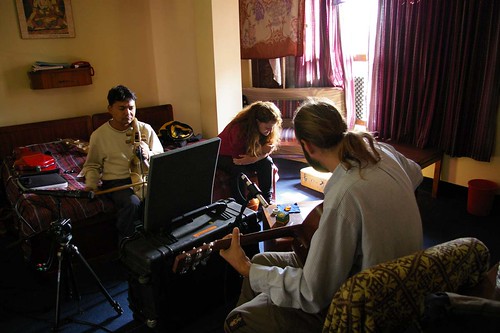
Back in Kathmandu, we've spent the last few weeks mostly in our recording studio. Most professional recording studios we've found here are great for radio voices but too dead for acoustic instruments, so we've converted Tara and Danny's hotel room into a decent space, complete with hot showers for the musicians, something the Gandharbas don't get too often. The studio isn't perfect, and we have to stop for airplanes, water tanks being filled, or the odd Maoist rally in the streets below.

This last week has been a big one for Nepal. Maoist leaders signed a permanent ceasefire with the Nepali government, approving a new constitution that appears to have made everyone happy. The UN is excited (it may be one of the few recent cases of UN mediation actually helping achieve peace), and Nepal is gearing up to be a tourist destination again, with new trekking routes in the works and an optimistic plan to bring the country out of third world living standard within a decade.

But we've got a record to make, and several Nepali and Appalachian songs to teach each other. We can't play you the cuts for the disc, but here's Danny and Buddhiman making a little fusion of the ubiquitous Nepali folk song, Resham Firiri.

We've just got a few days left here in Nepal, but I'll try to keep the blog updated as we get through the footage. We'll see if we can get Tara and Danny to make a couple posts too.


Monday, November 13, 2006

Return to Lamjung

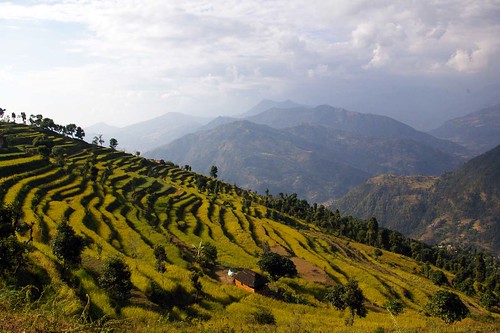
Buddhiman and I hop in a minibus back to Kalimati in Lamjung, cross the creaky bridge and walk through the now harvested rice fields to his home in Pipal Tari. Neighboring farmers ride their plows on the backs of water buffalo as others wave straw platters at the rice piles, blowing the chaff away. Everyone is friendly, a welcome respite after the unending touts in Thamel. At night the stars are vast above the open fields, with thousands of crickets chirp in unison and the occasional rhythm of a distant madal drum.


It's nice to have another few days off from the grime and hustle of Kathmandu. I've left Tara and Danny in the good hands of Monga. Between Danny's ears and Monga's computer knowledge, they should be able to keep the recording sessions running smoothly.

We came back for a Puja, a religious ceremony that Buddhiman's wife was going to hold. But she consulted a Brahmin priest who advised her to wait until December. In any case, we're here with camera and mic, and we spend the next day climbing up the ridge again to Moria (which means Banana tree by the way), and further along the ridge to a small shrine to Shiva, where Buddhiman plays a few tunes before clouds engulf the mountains to the north.

Buddhiman's son has joined us, and he picks up chesnuts for us along the walk. With Buddhiman in Kathmandu most of the time, Suman is mature for a 15 year old, hooking up the electicity in his house with simple wires and bartering for rice with the neighbors when Buddhiman's sarangi sales in Kathmandu aren't enough. I give him the sound kit to run for awhile and we film and record a passing donkey caravan and some local villagers doing odd farm chores.

Suman will probably never go village to village like the previous generation. Buddhiman's made enough for him to stay in school so far, and he'll be done in a year or two. After that his prospects are most likely getting married and going to Kathmandu to sell sarangis to indifferent tourists. But in any case, he's 15 and enjoying the cd player Tara and Danny gave to his father. He plays the rough mix of a song Buddhiman sings on nonstop.

We walk back beneath the ridge, passing round mudbrick huts, bamboo groves, and a small snake on the side of the trail. It's no bigger than an earthworm but Buddhiman holds us back. Really poisonous apparently.

"Do you ever see cobras down in Pipal Tari?" I ask.

"Sometimes."

"How big do they get?"

He holds his hands up to indicate the girth; about the size of a grapefruit. Then he tells me about how down in Chitwan, some snakes will latch on the the breasts of sleeping mothers to suck their milk. He says it's not uncommon for new mothers to die in their sleep from suckling cobras.


We cross the ridge and I ask Buddhiman to play a tune while the light's still good. He plays this song (video from the cheap camera operated with my third hand--others busy recording sound, running the DV camera, and shushing loud passersby). The song is about Sagarmatha, better known to you and me as Mt. Everest. It's hard to tell how old some of the songs are. An old song can mean 5 years old to a Gandharba, as if there's no way to distinguish between the recent and distant past. And the Gandharbas are so used to improvising that a "new" song might just mean the one they just made up. Not the easiest stuff to document, but the melodies are often passed down, if not the words.

Back in the village we sit on Buddhiman's porch drinking raksi and eating dahl baht. Buddhiman tells me about how his father and grandfather were known to play songs to bring the rain. The rain would last the duration of the song. This skill has been lost, but was witnessed within living memory of some Gandharbas, like the ones we met in at Manoj's home in Chitwan. There was apparently a book containing the words to these rain songs in the Gandharba language, but this text was supposedly stolen by a Nepali and sold to an unknown foreigner.

Buddhiman plays a few more songs and we sleep, catching a bus the next morning back to Kathmandu. There's an accident on the road and we walk the last few miles into the valley, catching a ride on top of an overcrowded bus.

That evening Monga, Dan, and I discuss cultural preservation and what we're really doing to encourage it among the Gandharbas. There's no way we could stop younger Gandharbas from listening to Hip Hop or wanting to move to the city to become street hustlers with miniature sarangis as tourist trinkets. Radio and television, which have replaced the Gandharbas as the storytellers in most rural villages, are not going away anytime soon.

Sure, we've donated recording equipment and helped some children go to school, but I think if we have any real impact, it will be on the kids of the elder Gandharbas we recorded, the ones who noticed someone else was interested in Grandpa's old sarangi, collecting dust on the wall. Maybe a few of those kids might ask for a lesson. But we'll never know.

Thursday, November 09, 2006

Kathmandu

Back in the big city, we rehearse and scout for studios to record a CD that will capture the best songs that we think show the similarities between Appalachian and Himalayan folk music. No small task, since drums are rare in Appalachian music and Nepalis don't use pickup notes; everything starts on the downbeat. There are all sorts of tempo issues which make multi-track recording a challenge. And of course there's keeping the atmosphere relaxed. But so far so good. The gear has more or less survived the rattling of three weeks in a van and we eventually decide on a hotel room that is relatively quiet.

But we're getting ahead of ourselves. There's songs to be learned. The songs that both Nepalis and Americans can recognize, even if the tune comes from some backwoods halfway across the world, where people might be Buddhist instead of Baptist. Where the civil war might refer to something else entirely. But there's something in the a few of the songs that is mysteriously connected. Here's Danny and Buddhiman playing a few licks from a tune called Paina Coppara, or "No News from You."

A surprise our first few days back: Akal and his wife show up at my guest house. She's going to get that finger amputated, and is short on cash. We need to test out a studio space, so I tell Akal if he plays a few songs with us, I'll cover the operation. A strange arrangement to be sure, but he sings us this song, about a boy and a girl, while his wife pulls rosin from a tree in the compound of Green Productions, Monga's friend's studio. Here's a link to some Nepali pop music that Neeraz and friends produce there.

I'm off to Lamjung again this weekend with the talented Mr. Buddhiman, but I promise to put more photos, music, and maybe some video up real soon. So check these last few updates again next week and there'll be a few gems to brighten your day...

The Terai

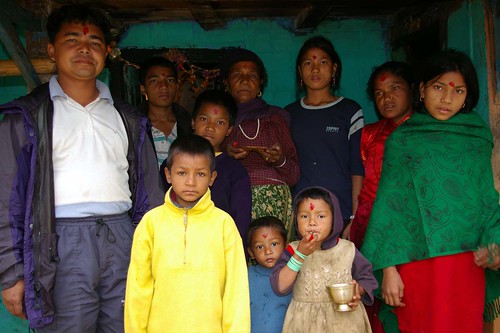
We leave Hum Bahadur and drive out of the Himalayan foothills to the northern edge of Chitwan National Park, where we spend a night in Jyamire with Shiva Gandharba's family, a friend of ours from Kathmandu. Shiva's father builds sarangis and there's about 20 kids in and around the family compound to keep us occupied. Most of the locals here are sharecroppers, and quite poor, even compared to the Gandharbas we'd met in the mountain towns.

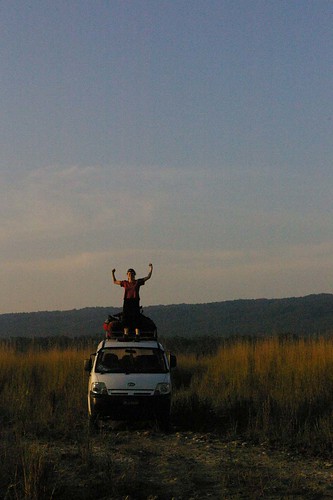
The next morning we drive deep into Chitwan to stay at with Manoj's family in an area called Madi. Save for the odd solar panel, there's no electricity around these parts. Vehicles don't make it out here much, so the Mountain Music Project begins the latest phase of it's aid work in the pursuit of folk music. In Nepali English we can now say, "The Mountain Music Project: Also Roads Building." We hold our breaths crossing a few rivers, push the Kia through narrow riverbeds and finally pull out the shovels, rearrange rocks, and stack pieces of sod to get ourselves to Madi by nightfall.

It's peaceful and hot in Madi, the lowlands filled with amber rice fields as locals harvest with short sickles. Since it's in the middle of a national park with tigers, rhinos, and bears, people stay in most evenings, and we play music together by candlelight to the chagrin of our filmmakers. In the daytime we record and are also invited to a few local schools for which the Gandharba Culture and Arts Organization, along with our help, has provided a few scholarships as well as basic school supplies. We are serenaded with tea and marigold necklaces, and a few brave children practice their English.

In Madi we meet some elder Gandharbas who can still speak an old language even Buddhiman, Manoj, and Ganesh can barely understand. This Gandharba language is on it's last legs, but we manage to record a few songs and interviews with the few who can speak it. Manoj takes us to a nearby lake and waterfall where we film Buddhiman playing a bit.

Can't help but wish we had more time, but most of the crew is pretty weary from all this running around the last few weeks, and anyway we're out of cash, so it's back to Kathmandu to work on some studio recordings and filming interviews with the Gandharbas who've moved to the cities. We've been looking for the few Gandharbas who still go village to village, and, just as we're about to climb in the van, an old Damai man comes to Manoj's family compound and serenades us with his buffalo horn. The valleys glow as we follow the rivers back into the mountains and into Kathmandu Valley.